
What Are You Looking For?

As solar energy becomes more accessible to urban residents, balcony solar systems are gaining popularity as a practical solution for apartments and small living spaces. One of the most common concerns among users is whether these systems can be installed without drilling, especially to avoid damaging building structures or violating property regulations.
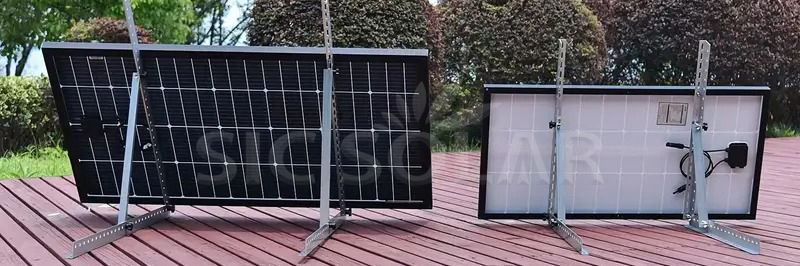
In many cases, balcony solar systems can indeed be installed without drilling. Modern mounting designs focus on non-invasive installation methods that allow solar panels to be securely attached without making permanent modifications to the building. This is particularly important for renters or residents in shared buildings where structural changes may not be permitted.
One of the most widely used solutions is clamp-based mounting. These systems use specially designed brackets that attach directly to balcony railings. By tightening the clamps, the mounting structure can hold the solar panels firmly in place. This method avoids the need for drilling holes while still providing sufficient stability for daily operation.
Another approach involves hook or hanging systems. In this design, the solar panels are mounted on frames that hang over the balcony railing or are supported by adjustable brackets resting against the structure. These systems are typically lightweight and easy to install, making them suitable for small-scale applications.
Ballasted mounting is also an option in certain cases. Similar to flat roof systems, this method uses weight to keep the solar panels stable. While less common for balconies due to space and load limitations, it can be applied in specific designs where the structure can safely support additional weight.
Despite the advantages of non-drilling installation, stability and safety must always be carefully considered. Balcony solar systems are exposed to wind and weather conditions, so the mounting system must be strong enough to prevent movement or displacement. High-quality materials such as aluminum and stainless steel are typically used to ensure durability and corrosion resistance.
Proper design and installation are essential to ensure safety. The mounting system should be selected based on the type of balcony railing, load capacity, and local environmental conditions. In areas with strong winds, additional reinforcement or more secure fastening methods may be required.
Manufacturers such as SIC Solar provide a range of photovoltaic mounting solutions, including balcony mounting systems designed for easy installation and reliable performance. Their products often include adjustable brackets and secure fastening mechanisms that allow for non-penetrating installation while maintaining structural stability.
Another advantage of non-drilling systems is ease of removal. Since there is no permanent modification to the building, the system can be easily disassembled or relocated if needed. This flexibility is particularly useful for temporary installations or for users who may move in the future.
While drilling is not always necessary, it may still be recommended in certain situations where additional stability is required. The choice ultimately depends on the specific installation environment and safety requirements.



 IPv6 network supported
 English
  Deutsch
 español
 português
 Nederlands
 العربية
 日本語
日本語 한국의
한국의 Melayu
 Tiếng việt