
What Are You Looking For?

Metal roofs are among the most suitable roofing materials for photovoltaic installations due to their durability, long service life, and structural strength. However, not all metal roofs are the same. Different roof profiles require different mounting methods and hardware to ensure a secure, weather-resistant installation. Understanding the characteristics of each roof type helps project owners choose the most appropriate solar mounting solution.
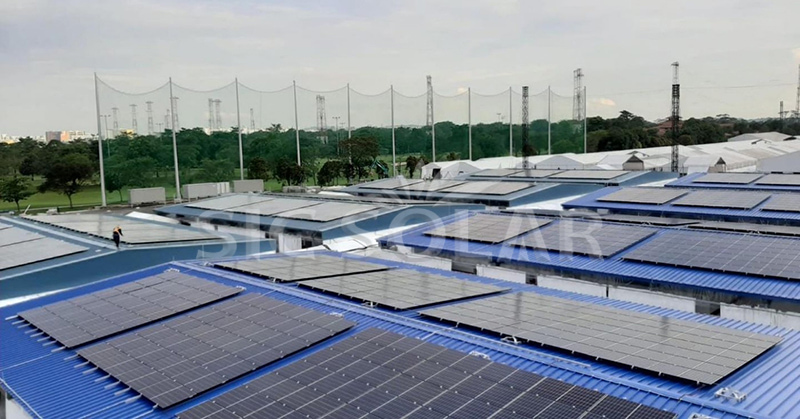
Standing Seam Metal Roofs
Standing seam roofs are considered one of the best options for solar installations. They feature raised seams that allow mounting clamps to attach directly to the roof without drilling through the roofing material. This non-penetrating installation method preserves the roof's waterproof integrity while reducing installation time. Standing seam roofs are widely used in commercial and industrial buildings because they offer excellent durability and compatibility with solar mounting systems.
Corrugated Metal Roofs
Corrugated metal roofs are commonly found on residential homes, agricultural buildings, and warehouses. Their wave-shaped profile requires mounting components such as L-feet, mini rails, or roof brackets that are fastened through the roof into the structural purlins. Waterproof washers and EPDM rubber seals are used to prevent water leakage around fastening points. With proper installation, corrugated roofs provide a reliable platform for photovoltaic systems.
Trapezoidal Metal Roofs
Trapezoidal metal roofs have flat sections between raised ribs, making them suitable for several mounting options. Short rail systems are especially popular because they reduce material usage and simplify installation. Depending on the roof profile and load requirements, full rail systems may also be used for greater flexibility in panel positioning.
Ribbed Metal Roofs
Ribbed metal roofs are similar to trapezoidal roofs but vary in rib spacing and height. Solar mounting systems for these roofs are selected according to the manufacturer's profile dimensions. Proper bracket placement ensures balanced load distribution and long-term structural stability.
Insulated Sandwich Panel Roofs
Some commercial and industrial buildings use insulated metal sandwich panels. Solar mounting on these roofs requires careful engineering to ensure that loads are transferred to the structural members beneath the insulation layer. Specialized fasteners and support brackets are often used to maintain both structural integrity and waterproof performance.
Selecting the right mounting system is just as important as choosing the right roof. Factors such as wind load, snow load, roof thickness, and local building codes all influence the final design. A properly engineered mounting solution helps maximize system safety and long-term reliability.
Manufacturers such as SIC Solar, a company specializing in the production and supply of photovoltaic mounting systems, offer a wide range of solutions for different metal roof types. Their product portfolio includes standing seam clamps, mini rails, roof hooks, L-feet, and customized mounting accessories designed to fit various roof profiles while improving installation efficiency and durability.
Regardless of the roof type, every installation should begin with a structural assessment to verify the roof's load-bearing capacity and identify the most suitable attachment points. Using high-quality mounting components and following professional installation practices helps ensure the solar system remains secure and performs reliably throughout its service life.



 IPv6 network supported
 English
  Deutsch
 español
 português
 Nederlands
 العربية
 日本語
日本語 한국의
한국의 Melayu
 Tiếng việt