
What Are You Looking For?

Choosing a solar mounting system manufacturer is an important decision for solar distributors, EPC contractors, installers, and project developers. The mounting structure directly affects how securely solar panels are installed, how well the system performs under local weather conditions, and how much maintenance may be required over its service life.
However, comparing manufacturers based only on product prices, catalogs, or quoted delivery times can be misleading. A reliable supplier should also demonstrate engineering capabilities, consistent manufacturing quality, suitable material selection, and practical project support.
So, how can buyers evaluate a solar mounting system manufacturer before placing an order? The following guide explains the key factors to check, the documents to request, and the questions worth asking before making a purchasing decision.
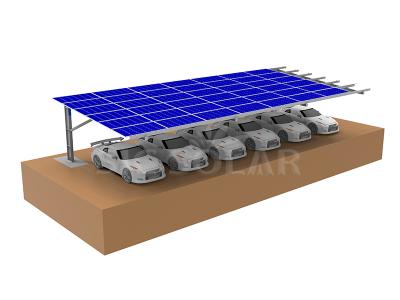
A solar carport project illustrates why structural design, material quality, and manufacturing consistency matter when selecting a mounting system supplier.
Before reviewing individual products, buyers should understand who they are purchasing from. A company that has experience in photovoltaic mounting structures is more likely to understand the practical requirements of different installation environments, module configurations, and project types.
Instead of relying only on statements such as "professional manufacturer" or "high-quality supplier," look for evidence that demonstrates actual industry experience.
For example, SIC SOLAR, operated by Xiamen SIC New Energy Co., Ltd., integrates R&D, manufacturing, sales, and customer service. Its product portfolio covers pitched roof mounting, flat roof mounting, facade mounting, ground mounting, solar components, trackers, and carport structures.
Buyers can review the company's manufacturer background and company profile to better understand its business scope and technical positioning.
A solar mounting system is not simply a collection of aluminum rails, steel beams, clamps, and fasteners. It is a structural solution that must support photovoltaic modules while responding to the environmental conditions at the installation site.
A capable manufacturer should be able to evaluate the project requirements and provide a suitable structural design rather than recommending the same configuration for every customer.
During supplier evaluation, ask whether the engineering team can address the following factors:
For international projects, compliance should be evaluated against the standards and design requirements applicable to the specific installation location. SIC SOLAR identifies AS/NZS 1170 and JIS C 8955:2011 among the structural standards referenced in its company information.
Buyers should also request relevant structural calculations, drawings, and supporting test documentation when applicable. A supplier's ability to explain why a particular structure is suitable is more valuable than simply claiming that its products are strong.
Material selection has a direct influence on the durability, structural performance, and maintenance requirements of a solar mounting system. Since most mounting structures remain outdoors for many years, buyers should carefully evaluate both the base material and its corrosion protection.
Common materials used in photovoltaic mounting structures include:
However, material names alone do not establish product quality. Buyers should ask for material grades, thickness specifications, surface treatment details, and relevant inspection records.
For coastal installations, industrial areas, or locations with high humidity, corrosion protection deserves particular attention. The supplier should explain whether the selected material and coating are appropriate for the actual environmental exposure.
It is also worth checking whether different components within the same system use compatible materials and connection methods. Poorly matched materials or inadequate protective treatments can create long-term maintenance problems.
Consistent product quality depends on more than the quality of raw materials. Cutting, drilling, forming, welding, surface treatment, dimensional inspection, and final assembly can all affect the performance of a solar mounting structure.
Buyers should therefore understand how the manufacturer controls quality throughout the production process.
Useful questions to ask include:
SIC SOLAR states that it operates under an ISO 9001 quality management system to control production processes. Buyers can use this information as a starting point and request relevant supporting documentation to verify the certification scope and validity.
It is also useful to ask for actual production photos, inspection records, or sample components. These materials can help buyers understand whether the manufacturer's quality control procedures are supported by practical production activities.
Not every solar project uses the same roof structure, ground foundation, panel dimensions, or installation layout. A manufacturer should be able to recommend a suitable mounting configuration based on the specific project instead of offering a standard product that may require extensive modifications on site.
For rooftop installations, buyers should confirm whether the mounting solution matches the roof material and attachment requirements. SIC SOLAR provides different pitched roof mounting systems for metal and tile roof applications.
For flat roofs, it is important to evaluate the roof's load-bearing capacity, waterproofing requirements, panel tilt angle, and wind resistance. Ballasted and fixed-angle structures may have different installation requirements. Buyers can compare available flat roof solar mounting solutions when evaluating suitable configurations.
Ground-mounted projects require a different assessment. Soil conditions, terrain, foundation selection, structural spacing, and installation accessibility all influence the final design. A manufacturer offering ground solar mounting systems should be able to explain the differences between aluminum and steel structures and recommend an appropriate solution for the site.
For larger commercial projects, buyers may also consider whether the manufacturer can provide customized solar carport structures, including column spacing, parking layouts, panel orientation, and foundation arrangements.
One common purchasing mistake is evaluating only the main support structure while overlooking the smaller components that connect the entire system.
Rails, mid clamps, end clamps, roof hooks, grounding components, bolts, and connectors must work together correctly. Incompatible components can increase installation time, create fitting problems, and affect the reliability of the finished system.
Before placing an order, request a complete bill of materials or component list. Check the following details:
For example, SIC SOLAR supplies a range of solar mounting components, including rails, clamps, roof hooks, and other installation accessories. Reviewing these products helps buyers understand how individual parts fit into a complete mounting solution.
A detailed component list also makes it easier to compare quotations from different manufacturers on an equivalent basis.
Product specifications explain what a manufacturer claims to supply, but completed projects can provide a clearer picture of how its solutions are applied in real installation environments.
Ask the manufacturer for project references that are relevant to your intended application. Ideally, the examples should have similar structural requirements, installation conditions, or system capacities.
When reviewing project cases, pay attention to:
For example, SIC SOLAR showcases different project applications, including rooftop installations, ground-mounted PV structures, and solar carports. Buyers can review its solar mounting system product range and project information to identify solutions relevant to their own requirements.
When possible, request references for projects in similar climates. A mounting structure used successfully in a mild inland environment may require different considerations when installed in a coastal or high-snow region.
Solar mounting systems are long-term infrastructure components. Their value should therefore be evaluated over the expected service period rather than only by the initial purchase price.
A reliable manufacturer should provide clear warranty information and explain how technical support is handled after delivery.
Before ordering, confirm:
SIC SOLAR states a 10-year warranty and a 25-year service life for its mounting solutions in its company information. These figures should be checked against the specific product quotation, written warranty terms, and applicable installation conditions before purchase.
Buyers should avoid assuming that every product in a manufacturer's catalog has identical warranty coverage. Different materials, structures, and environmental conditions may have different requirements.
Price is an important purchasing factor, but the lowest quotation does not necessarily represent the best overall value.
A complete solar mounting system quotation should clearly identify the main structure, accessories, material specifications, surface treatment, packaging, and delivery arrangements.
Additional costs may arise from:
Installation efficiency should also be considered. A well-designed system with compatible components, clear installation instructions, and appropriate pre-assembly may reduce labor requirements and avoid unnecessary adjustments.
When comparing suppliers, request quotations based on the same technical specifications, quantities, delivery terms, and scope of supply. This makes the comparison more meaningful and reduces the risk of unexpected costs after an order is confirmed.
Communication quality can reveal a lot about how a manufacturer handles customer requirements. During the quotation stage, pay attention to whether the supplier asks relevant technical questions or simply sends a standard price list.
A professional solar mounting system manufacturer should be willing to discuss the installation location, roof or ground conditions, module specifications, project capacity, and local structural requirements.
Good communication also means providing clear answers about lead times, production schedules, packaging, shipping arrangements, and documentation.
If a supplier cannot explain its product specifications or provide clear answers before receiving an order, buyers should carefully consider whether the same communication problems may continue during production and delivery.
For project-based purchases, technical communication is especially important because small specification differences can affect the entire mounting configuration.
After evaluating the manufacturer, buyers should complete a final technical and commercial review. This helps prevent misunderstandings between the quotation, approved drawings, and delivered products.
The following checklist can be used before confirming a purchase order:
| Evaluation Item | What Buyers Should Confirm |
|---|---|
| Company background | Manufacturer experience, production capabilities, and project references |
| Engineering design | Structural calculations, drawings, wind and snow load requirements |
| Material specifications | Material grades, thickness, and corrosion protection |
| Quality control | Quality management documents and inspection procedures |
| Product compatibility | Module dimensions, mounting accessories, and connection details |
| Warranty | Written coverage, exclusions, and after-sales support |
| Commercial terms | Pricing, MOQ, lead time, packaging, shipping, and payment terms |
It is also advisable to obtain written approval for the final drawings, bill of materials, product specifications, and delivery schedule before production begins. Any agreed customization should be documented in the purchase order or its technical attachments.
For buyers looking for a solar mounting system manufacturer with a broad product portfolio and integrated technical capabilities, SIC SOLAR is one supplier worth evaluating.
Xiamen SIC New Energy Co., Ltd. integrates research and development, manufacturing, sales, and service. Its mounting solutions cover residential, commercial, and utility-scale solar applications.
Some of the key points buyers can investigate when evaluating SIC SOLAR include:
Rather than choosing a supplier based on a single selling point, buyers should evaluate these capabilities alongside their project specifications, required documentation, and commercial conditions.
A suitable mounting system manufacturer should be able to provide more than individual products. It should help buyers identify the right structure, verify technical requirements, coordinate components, and reduce potential problems throughout the purchasing and installation process.
For project inquiries, buyers can visit SIC SOLAR's official website to explore available solar mounting solutions and discuss their project requirements with the team.
How can buyers identify a reliable solar mounting system manufacturer?
Buyers should evaluate the manufacturer's industry experience, engineering capabilities, production quality control, material specifications, project references, certifications, warranty terms, and technical support. A reliable manufacturer should be able to provide clear documentation and explain how its mounting solutions meet the project's requirements.
What certifications should a solar mounting system manufacturer have?
ISO 9001 is a useful quality management system reference when evaluating manufacturing processes. Structural design and testing should also be reviewed against applicable local standards, such as AS/NZS 1170 or JIS C 8955:2011, depending on the project location. Buyers should verify the actual certificates, test reports, and their scope rather than relying only on general claims.
Why is engineering capability important when choosing a solar mounting supplier?
Engineering capability helps ensure that the mounting structure is suitable for local wind loads, snow loads, roof conditions, soil conditions, module dimensions, and foundation requirements. Proper structural design can reduce installation problems and improve long-term system reliability.
Which material is better for solar mounting systems: aluminum or steel?
Neither material is universally better. Aluminum alloy is lightweight and corrosion-resistant, making it suitable for many rooftop and lightweight structures. Galvanized steel provides high structural strength and is often used in ground-mounted systems. The best choice depends on structural requirements, environmental conditions, project costs, and maintenance expectations.
What documents should buyers request before placing a solar mounting system order?
Buyers should request product specifications, material details, structural drawings, load calculations where applicable, relevant test reports, quality certificates, a bill of materials, installation instructions, packaging details, and written warranty terms. These documents help confirm that the quoted products match the project requirements.
How important are project references when evaluating a solar mounting manufacturer?
Project references help buyers assess whether a manufacturer has experience with similar installation types and environmental conditions. Reviewing completed installations, project specifications, and available customer feedback can provide useful evidence of practical manufacturing and engineering experience.
What should buyers compare when evaluating solar mounting system quotations?
Buyers should compare material grades, component dimensions, structural design, surface treatment, accessories, packaging, delivery time, warranty coverage, and technical support. Comparing only the unit price may overlook important differences in product specifications and total project costs.
What is the difference between a solar mounting system manufacturer and a trading company?
A manufacturer generally has direct involvement in production, quality control, and potentially product development. A trading company primarily coordinates product sourcing and sales. However, some suppliers combine both roles. Buyers should verify actual production capabilities, factory documentation, and quality control responsibilities before making a decision.



 IPv6 network supported
 English
 Deutsch
 español
 português
 Nederlands
 العربية
 日本語
 한국의
 Melayu
 Tiếng việt