
What Are You Looking For?

Single-pole solar mounting systems are widely used in ground-mounted photovoltaic projects, especially where space efficiency and flexibility are important. Unlike multi-post structures, a single-pole system supports multiple solar panels on one central pole, making it suitable for both small-scale installations and specialized applications. Proper installation is essential to ensure structural stability and long-term performance.
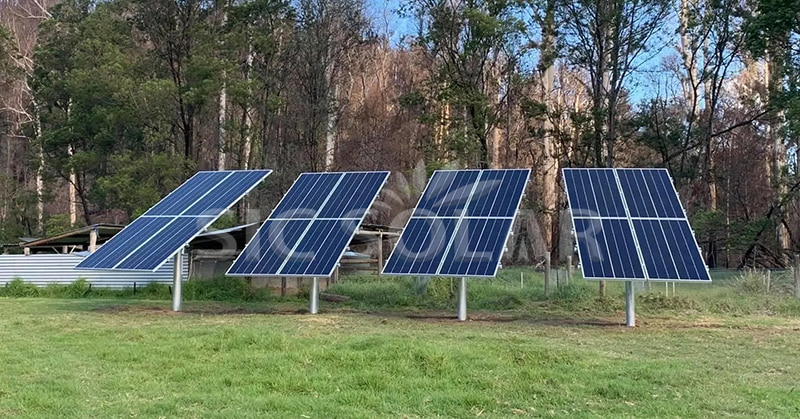
The installation process begins with site assessment and preparation. Before any construction work starts, the soil condition must be evaluated to determine the appropriate foundation method. Factors such as soil density, moisture content, and load-bearing capacity influence whether the pole will be installed using a ground screw, driven pile, or concrete foundation. Accurate site measurement is also carried out to define the layout and positioning of each pole.
Once the site is prepared, the foundation is installed. For many projects, this involves driving a steel pile or ground screw into the ground to the required depth. The foundation must be aligned vertically to ensure that the pole remains stable. In some cases, concrete may be used to secure the base, especially in softer soil conditions. The strength of the foundation is critical, as it supports both the weight of the panels and environmental loads such as wind.
After the foundation is ready, the main pole is mounted. The pole is fixed securely to the foundation using bolts or welding, depending on the design. It is important to check the vertical alignment during this step, as any deviation can affect the balance and performance of the entire system. A properly installed pole provides the central support for the mounting structure.
The next step is installing the mounting framework. This includes brackets and arms that extend from the pole to hold the solar panels. These components are attached according to the system design, ensuring that they are level and properly spaced. The tilt angle of the structure is adjusted at this stage to optimize sunlight exposure.
Mounting rails are then installed onto the framework. These rails serve as the base for fixing the solar panels. Once the rails are secured, the panels are positioned and fixed using mid clamps and end clamps. Proper tightening is necessary to ensure that the panels remain secure under wind and other environmental forces.
Electrical grounding and cable management are also important parts of the installation. Grounding ensures system safety by providing a path for electrical faults, while organized cable routing helps protect wiring from damage and improves overall system appearance.
Using high-quality components is essential for long-term reliability. Manufacturers such as SIC Solar provide solar mounting systems and accessories designed for efficient installation and structural durability. Their solutions are engineered to integrate smoothly, helping installers complete projects with consistent quality and performance.
Final inspection is carried out after installation to ensure that all components are securely fastened and properly aligned. This includes checking the stability of the pole, the tightness of bolts, and the positioning of the panels. A well-installed single-pole solar mounting system offers a strong and efficient solution for generating solar energy in various environments.



 IPv6 network supported
 English
  Deutsch
 español
 português
 Nederlands
 العربية
 日本語
日本語 한국의
한국의 Melayu
 Tiếng việt