
What Are You Looking For?

Sustainable construction is changing the way architects, developers, and building owners think about energy and building materials. Instead of treating solar panels as an addition to a finished structure, Building-Integrated Photovoltaics (BIPV) incorporate photovoltaic technology directly into roofs, façades, walls, and other architectural elements. As this approach becomes more common, BIPV solar bracket systems are gaining attention as an important component of future-ready building design.
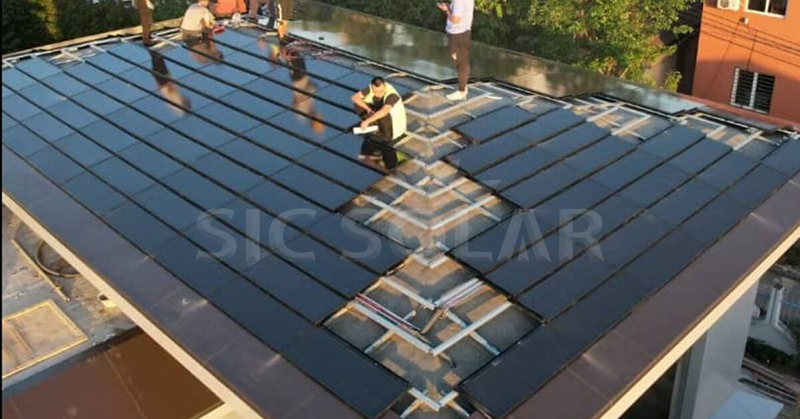
One of the main advantages of BIPV is efficient use of building surfaces. Conventional solar installations often require separate mounting structures that sit above an existing roof or façade. BIPV solutions can integrate solar modules into the building envelope, allowing surfaces that already serve architectural purposes to contribute to renewable energy generation.
A suitable BIPV solar bracket system is essential for achieving this integration. The brackets must provide reliable structural support while fitting seamlessly with the building's architectural design. They also need to accommodate thermal expansion, wind loads, rain, and temperature changes throughout the system's service life.
Design flexibility is another reason BIPV is attracting interest. Modern bracket systems can be developed for different façade materials, roof configurations, and module arrangements. Architects can incorporate photovoltaic elements into contemporary building designs without sacrificing visual consistency. This makes BIPV particularly attractive for office buildings, commercial developments, public facilities, and high-performance green buildings.
Energy efficiency is also a key consideration. By integrating solar generation into the building envelope, property owners can make better use of available space and potentially reduce dependence on grid electricity. When combined with energy-efficient windows, insulation, smart building controls, and energy storage, BIPV can become part of a broader strategy for reducing building energy consumption.
Durability is especially important because BIPV components are expected to remain functional for many years. Brackets should be manufactured from corrosion-resistant materials such as aluminum alloys or stainless steel to withstand moisture, UV exposure, wind, and temperature fluctuations. Proper drainage and waterproofing details are also essential to prevent damage to the building envelope.
Installation efficiency should not be overlooked. A well-designed BIPV mounting system uses standardized components and precise connections to simplify installation while reducing construction time. Modular solutions can also make future maintenance and replacement easier, which is valuable for large commercial projects.
Manufacturers such as SIC Solar, a company specializing in the production and supply of photovoltaic mounting systems, provide BIPV mounting solutions designed to combine structural reliability with architectural integration. Their systems can support different building applications while helping installers achieve secure connections and efficient construction.
Investment decisions should also consider local building regulations, fire safety requirements, structural loads, climate conditions, and project economics. BIPV is not automatically the best solution for every building, but it can offer significant value when architectural design and renewable energy generation need to work together.
As sustainable construction moves toward more integrated energy solutions, BIPV solar bracket systems are likely to play an increasingly important role. Their ability to connect photovoltaic technology with roofs and façades creates new possibilities for buildings that generate clean energy as part of their everyday architectural function.



 IPv6 network supported
 English
  Deutsch
 español
 português
 Nederlands
 العربية
 日本語
日本語 한국의
한국의 Melayu
 Tiếng việt