
What Are You Looking For?

Metal roofs—those stalwarts of commercial buildings, warehouses, and even farms—have become the go-to canvas for solar installations. But here's the kicker: choosing the right materials for solar mounting components is no small feat. They brave the elements for decades, and you want them to stand strong against corrosion and wear. So, what’s in the mix? Well, aluminum, galvanized steel, and stainless steel are the heavy hitters in this arena.
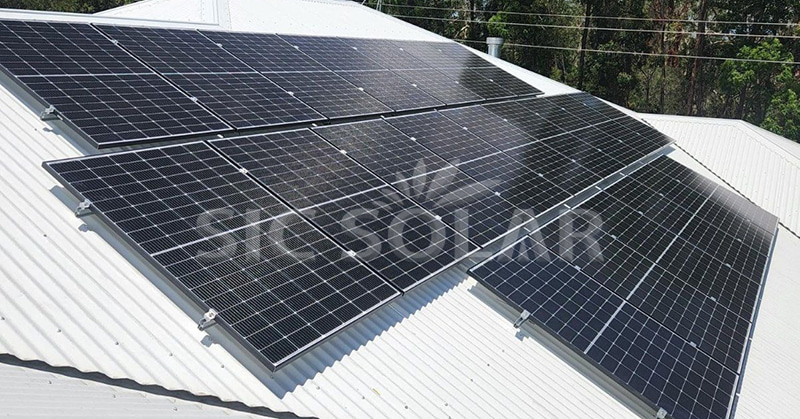
Aluminum—oh, the lightweight champion! It’s often the choice for solar rails, brackets, and clamps. Picture this: easy transport, effortless installation. And let’s not forget its natural knack for resisting corrosion, making it a perfect fit for those humid coastal vibes. Anodized aluminum? That’s like giving it a superhero cape—extra protection against rain, UV rays, and temperature swings...
Then there’s galvanized steel, the muscle of the group. It’s the go-to for components that need to flex their strength. Think roof brackets and structural supports that can handle the weight of snow and the push of wind. Coated in zinc, it fights off moisture like a champ, reducing rust risks. Hot-dip galvanized steel? That’s the tough cookie for outdoor challenges, boasting a robust protective layer.
Now, stainless steel—this is where it gets serious. Fasteners, bolts, screws... these are the unsung heroes that keep everything together. With its stellar corrosion resistance, it ensures that connections remain tight, even in the wettest, most industrial of environments. Because let’s face it, those connection points are like the Achilles' heel if you don’t use the right materials...
And let’s not overlook EPDM rubber, which sneaks into sealing washers and protective parts. It’s got a solid grip on weathering, UV rays, and temperature shifts. When it wraps around roof penetrations, it forms a reliable seal, keeping water at bay.
But wait—material compatibility is a whole other ball game. When different metals mingle, moisture can spark galvanic corrosion. Yikes! That’s why it’s crucial to choose the right combinations, protective coatings, and isolation methods. Quality mounting systems are crafted with this in mind, ensuring that rails, clamps, fasteners, and roof attachments play nice together.
The materials chosen should also vibe with the roof type and local conditions. Coastal projects? They need to be extra resistant to corrosion. Heavy snow or fierce winds? Mechanical strength takes center stage. And don’t forget to assess the roof’s structural capacity before diving into installation...
Companies like SIC Solar, specialists in photovoltaic mounting systems, know the drill. They use tough, corrosion-resistant materials tailored for various metal roof applications. Their solutions? Think aluminum rails, galvanized steel bits, stainless steel fasteners, and weather-resistant seals—all designed for secure attachment and long-lasting outdoor performance.
Surface treatment quality? Just as crucial as the base material itself. Anodizing, galvanizing, and other protective treatments can extend the life of components and boost their resilience against harsh environments. And let’s be real—installation needs to be spot on to avoid any scratches or damage to those protective coatings.
So, when it comes to metal roof solar mounts, finding the right blend of aluminum, galvanized steel, stainless steel, and weather-resistant materials is key. It’s all about striking that sweet spot between installation ease, corrosion resistance, and long-term structural integrity. Ultimately, the best combo hinges on the roof profile, climate, load demands, and the unique quirks of the project at hand...



 IPv6 network supported
 English
  Deutsch
 español
 português
 Nederlands
 العربية
 日本語
日本語 한국의
한국의 Melayu
 Tiếng việt