
What Are You Looking For?

Solar cable management is an important part of a reliable rooftop photovoltaic installation. Even when solar panels and mounting structures are installed correctly, loose DC cables can rub against metal edges, hang beneath the modules, move in the wind, or collect around roof drainage areas. Over time, poor routing can increase the risk of insulation damage, connector strain, water exposure, and difficult maintenance.
How should solar cables be managed on rooftop mounting systems? The best approach is to plan the cable route before installation, secure cables with suitable clips, maintain the manufacturer's minimum bending radius, protect connectors from mechanical stress, and keep wiring clear of the roof surface and drainage paths. SIC SOLAR offers cable clips for solar panel systems designed to hold photovoltaic cables neatly against the module frame or mounting structure.
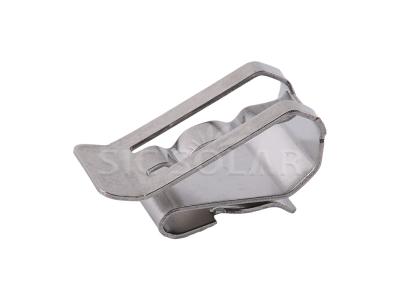
Rooftop solar cables are exposed to sunlight, temperature changes, wind movement, moisture, and mechanical contact with nearby components. If cables are left hanging beneath the panels, they may repeatedly move against roof sheets, mounting rails, brackets, or sharp edges.
Good cable management helps reduce several common installation problems:
Proper cable routing does not replace electrical protection or correct system design. It works alongside appropriate cable selection, compatible connectors, grounding and bonding requirements, and the manufacturer's installation instructions.
Solar cables should follow a planned route along suitable module-frame areas or mounting components rather than hanging freely beneath the array. The exact path depends on the panel layout, rail arrangement, connector locations, roof profile, and the position of the inverter or cable collection point.
For most rooftop installations, installers should aim to:
On metal rooftops, cable routing should also account for the roof profile and the mounting arrangement. The cable path must not interfere with clamps, brackets, waterproofing details, or access required for roof maintenance. SIC SOLAR's solar roof clamps for roof mounting systems are one example of the mounting hardware used to secure a solar array to a suitable metal roof. Cable clips and routing points should be positioned so they do not interfere with the structural attachment.
The appropriate cable clip depends on the cable diameter, the number of cables to be held, the attachment location, and the outdoor exposure conditions. A clip should hold the cable securely without crushing the insulation or restricting the cable's required movement.
Stainless steel cable clips: These are commonly used for outdoor solar installations because they provide a durable mechanical attachment. SIC SOLAR lists SUS304 stainless steel cable clips intended for installation on solar panel frames. The exact clip size and configuration should be checked against the cable diameter and the manufacturer's recommendations.
Multi-cable clips: Some clips are designed to hold two or more cables. They can help keep wiring organized, but the selected model must provide enough space for each cable without pinching, excessive compression, or incompatible cable contact.
Cable ties: Suitable outdoor-rated ties can help organize cable bundles where permitted by the installation design. Their material, UV resistance, temperature rating, and compatibility with the supporting structure should be checked before use. Ordinary indoor plastic ties should not automatically be assumed suitable for long-term rooftop exposure.
For installations requiring a more secure cable-retention arrangement, SIC SOLAR also provides solar PV cable clips and clamps. These products are designed to attach to the panel frame or rail and help prevent cables from drooping or moving unnecessarily.
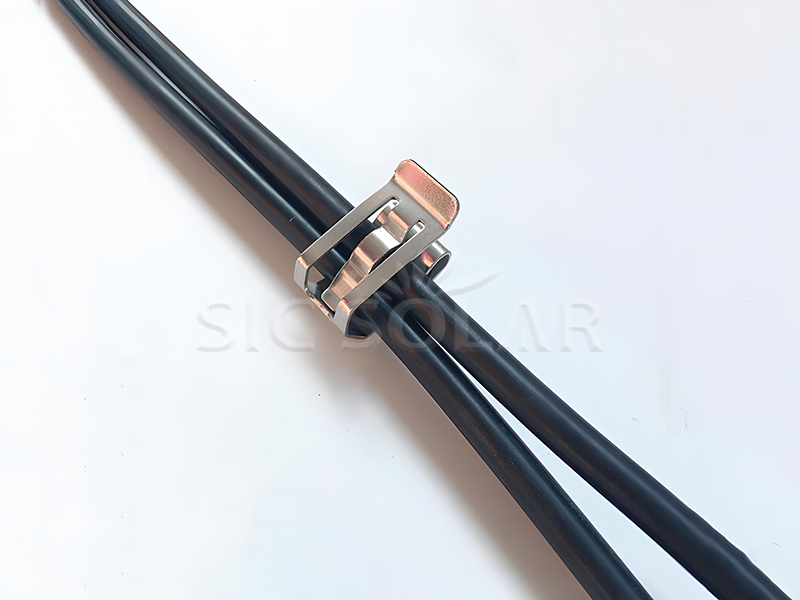
There is no universal clip spacing that is correct for every rooftop solar system. The appropriate distance depends on cable weight, cable stiffness, orientation, wind exposure, clip design, and the requirements of the cable and module manufacturers.
SIC SOLAR's cable management guidance discusses approximately 30–50 cm as a practical starting range for some installations. However, this should not be treated as a mandatory specification for every project. Shorter spacing may be needed for exposed cable runs, vertical sections, heavier bundles, or locations subject to greater movement.
Before choosing the spacing, installers should check the following:
The finished installation should have no long, unsupported sections that can sag toward the roof or become entangled with other components. Always follow the relevant product instructions and electrical installation standards rather than relying on a spacing rule alone.
Solar cables should not be bent more sharply than their specified minimum bending radius. A tight bend can damage the cable structure, place stress on the insulation, or create unnecessary force at the connector entry point.
When routing cables behind modules, leave enough room for a smooth curve and avoid pulling the cable tight to reach a connector. The required bending radius varies by cable type and manufacturer, so installers should consult the cable data sheet rather than assume a single value applies to every PV cable.
Connectors should be supported by the cable-routing arrangement without being used as structural attachment points. Avoid allowing the connector to carry the weight of a hanging cable bundle. Connections should also remain accessible for inspection where required by the installation design.
Do not secure cables by crushing them beneath module clamps, roof hooks, rail connectors, or other mounting hardware. Cable clips should be installed in approved positions and should not interfere with module movement, frame drainage openings, or the mounting system's load-bearing connections.
Photovoltaic cables installed outdoors must be rated for their intended exposure, including UV radiation, temperature variation, moisture, and the applicable electrical conditions. Cable clips and ties also need to withstand the environment in which they will be used.
For long-term rooftop performance, check that:
Conduit is not necessary for every exposed cable section, and adding it without considering heat dissipation, water ingress, or manufacturer requirements may create new problems. Choose additional protection according to the installation environment and applicable electrical standards.
Where cable bundles need additional organization, SIC SOLAR's cable ties category provides another accessory option to evaluate. Select the appropriate tie material and type for the exposure conditions, and avoid overtightening ties around PV cables.
Good cable management should make the electrical layout easier to understand, not simply make it look tidy. Cables should be arranged so installers can trace the intended circuit path, inspect connectors, and identify potential damage without dismantling unnecessary parts of the mounting system.
During installation, keep cable routes consistent across the array where practical. Separate and identify circuits according to the electrical drawings, and avoid bundling unrelated conductors in a way that makes troubleshooting difficult. Maintain access to required disconnects, connectors, grounding points, and inspection areas.
Do not hide damaged cables beneath modules or leave unapproved splices in inaccessible locations. Any repair, replacement, or connector work should be performed by qualified personnel following the equipment manufacturer's instructions and the applicable electrical safety procedures.
A clear cable layout can reduce maintenance time and help identify problems after storms, roof work, or other activities that may disturb the array. It also makes it easier to check whether clips have loosened or cables have shifted over time.
Before handing over a rooftop solar installation, inspect the complete cable route rather than checking only whether the clips appear secure. The aim is to confirm that the cables are supported, protected, and compatible with the electrical and mechanical design.
These checks help reduce preventable cable damage and make the system easier to maintain. If a cable is cut, crushed, overheated, or has damaged insulation, do not simply cover the affected area with a clip or tie. The problem should be assessed and corrected using an approved repair or replacement procedure.
How should solar cables be managed on rooftop mounting systems?
Plan the cable route before installation, secure cables to suitable module-frame or mounting-system locations with compatible clips, maintain the required bending radius, and keep wiring clear of sharp edges, roof drainage paths, and unsupported hanging sections. Follow the cable, module, and mounting-system manufacturers' instructions.
How far apart should solar cable clips be installed?
Clip spacing depends on the cable, clip design, orientation, and environmental exposure. A distance of approximately 30–50 cm may be a starting point for some layouts, but installers should confirm the required spacing from product instructions and site conditions. More frequent support may be needed in exposed or vertical sections.
Are stainless steel cable clips suitable for rooftop solar installations?
Stainless steel cable clips can provide durable mechanical support for outdoor PV wiring when the grade, clip dimensions, and attachment method are suitable for the environment. Confirm compatibility with the cable diameter, module frame, and mounting structure before installation.
Can solar cables rest directly on the roof?
Where practical, cables should be supported above the roof surface to reduce abrasion, standing-water exposure, and interference with drainage. The routing method must also comply with the cable manufacturer's instructions and applicable electrical requirements.
Can cable ties replace solar cable clips?
Suitable outdoor-rated cable ties can help organize bundles, but they are not automatically a substitute for clips. The correct choice depends on the support point, cable weight, UV exposure, attachment method, and required long-term durability.
What is the most common solar cable management mistake?
Leaving long unsupported cable sections is a common problem. Loose cables can move in the wind, rub against metal edges, collect near drainage areas, and place stress on connectors. A planned route with appropriate support helps prevent these issues.
For rooftop solar projects, SIC SOLAR's cable management accessories can help installers create a neater and more maintainable wiring layout. Choose the clips and fastening method according to the cable specifications, mounting structure, and installation environment.



 IPv6 network supported
 English
 Deutsch
 español
 português
 Nederlands
 العربية
 日本語
 한국의
 Melayu
 Tiếng việt