
What Are You Looking For?

Solar mounting systems installed in coastal areas must be selected for more than basic structural strength. Salt spray, high humidity, strong coastal winds, and frequent wet-dry cycles can accelerate corrosion, weaken connections, and shorten the service life of a photovoltaic mounting structure. Before installation, project owners and installers should check material compatibility, corrosion protection, wind loads, roof or soil conditions, drainage, and maintenance requirements.
For coastal solar projects, the most important principle is to choose a mounting system based on actual site exposure rather than relying on a standard inland specification. SIC SOLAR provides a range of solar mounting structures for different installation applications. The final configuration should be confirmed against local environmental conditions, engineering calculations, and applicable building requirements.
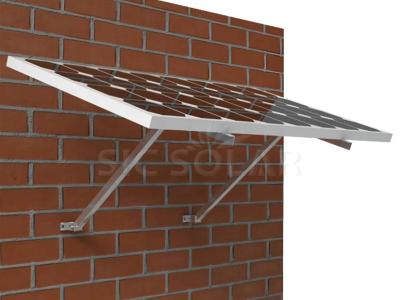
Coastal environments create several conditions that can affect the reliability of solar panel mounting structures. Salt particles carried by sea breezes settle on exposed metal surfaces. When combined with moisture, these deposits can promote localized corrosion, particularly around bolts, clamps, joints, and damaged protective coatings.
High humidity can also keep metal surfaces wet for longer periods. Meanwhile, coastal storms may expose solar panels and their supporting structures to substantial wind pressure and uplift forces. In low-lying areas, poor drainage or a high groundwater level can create additional challenges for ground-mounted systems.
These conditions mean that a mounting structure suitable for an inland site may not automatically be suitable for a coastal installation. Before ordering equipment, project teams should identify the site's distance from the sea, exposure to direct salt spray, prevailing wind conditions, and any relevant local corrosion classifications.
Material selection is one of the first checks for any coastal solar mounting project. Aluminum alloys, stainless steel, and galvanized steel can all be used in solar structures, but their performance depends on the alloy grade, surface treatment, coating specification, component design, and actual exposure conditions.
Aluminum mounting rails: Aluminum alloys commonly used in solar racking, such as AL6005-T5, offer a useful combination of strength, low weight, and corrosion resistance. An anodized surface can provide additional protection, but the condition of the finish, cut edges, drilled holes, and contact points still matters. Buyers can review the RV1 solar panel mounting rail for ground installations to understand the material and surface-treatment specifications of an available rail product.
Stainless steel fasteners: The stainless steel grade should match the site's chloride exposure. Grade 316 stainless steel generally offers better resistance to chloride-induced pitting than Grade 304 and is often considered for highly exposed coastal applications. However, Grade 316 is not completely immune to corrosion in every marine environment.
Galvanized steel structures: Galvanized steel can be appropriate for certain coastal projects when the coating type, coating thickness, and expected exposure are properly specified. For example, SIC SOLAR's steel ground solar panel mounting systems use hot-dip galvanized steel Q235B. Buyers should confirm that the coating and complete system specification are suitable for the project's corrosion category rather than assuming that all galvanized steel offers the same durability.
When comparing options, review the material certificates, coating specifications, and relevant corrosion test documentation. A general product description stating that a component is corrosion-resistant is not a substitute for evidence that it suits the intended installation environment.
Galvanic corrosion can occur when dissimilar metals are electrically connected while moisture containing dissolved salts provides an electrolyte. In solar mounting systems, the interfaces between aluminum rails, steel brackets, and stainless steel fasteners deserve particular attention.
Before installation, check whether the mounting system uses compatible materials and manufacturer-approved connection details. Where required by the design, suitable isolating washers, nonconductive pads, or other approved separation components can help reduce direct metal-to-metal contact. Drainage and sealing details should also prevent water from remaining trapped around joints.
Installers should avoid replacing specified bolts, washers, or clamps with visually similar alternatives without checking compatibility. A small change in fastener material or coating can affect corrosion behavior at the connection, even when the main rail remains in good condition.
For panel-to-rail connections, review the specifications of SIC SOLAR's solar panel quick fastening middle clamp. The listed product uses AL6005-T5 aluminum and SUS304 stainless steel. For direct marine exposure, confirm whether the specified fastener grade is appropriate or whether an alternative is required for the project.
It is also important to inspect exposed threads, cut edges, and coating damage after installation. Any field-applied repair coating or sealant should be compatible with the original protection system and used according to the manufacturer's instructions.
Coastal solar mounting systems may experience strong winds, storm gusts, and wind-driven uplift. The correct design must consider the project's location, building height, roof geometry, terrain exposure, panel arrangement, mounting height, and applicable local design standards.
Before installation, confirm the following structural details:
A product's published maximum wind rating should not be treated as a universal guarantee for every coastal project. The complete installation must be assessed as a system, including the panels, clamps, rails, brackets, anchors, and supporting structure. Local engineers should verify the design against the actual site conditions.
For projects using a suitable vertical mounting arrangement, SIC SOLAR's solar PV pole ground mounting system is one option to evaluate. Its published specifications include carbon steel construction and a stated wind-load figure. Buyers should verify the applicable design conditions, corrosion protection, foundation requirements, and engineering calculations before selecting it for a coastal site.
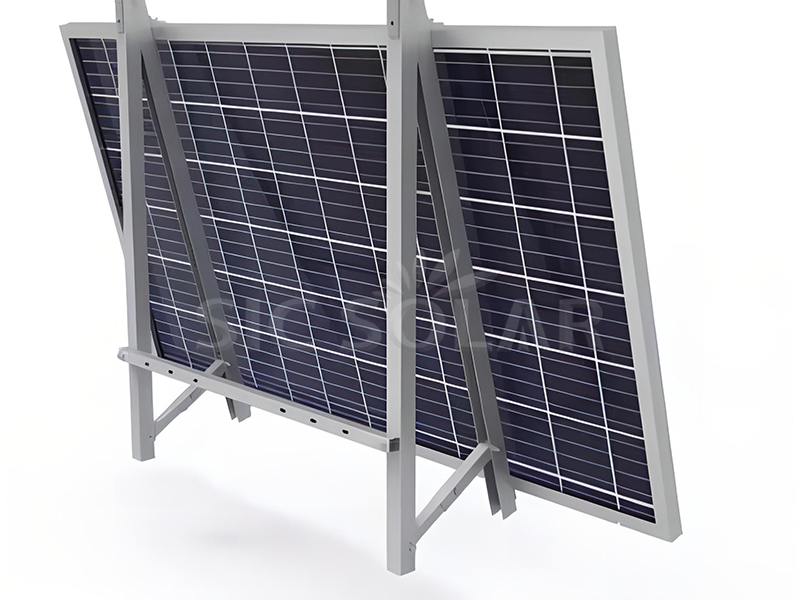
For coastal rooftop projects, the roof itself is just as important as the mounting hardware. Salt exposure can affect exposed metal roofing, fasteners, and existing roof accessories, while wind loads can place additional stress on the attachment points.
Check the roof material, structural condition, waterproofing, and existing corrosion before installation. Confirm that roof hooks, clamps, brackets, and screws are designed for the specific roof profile. Metal roofs, tiled roofs, and flat roofs require different attachment approaches, so a mounting solution should not be selected solely because it fits the panel dimensions.
Installers should also verify that roof penetrations are sealed correctly and that the mounting arrangement does not obstruct drainage. Water collecting around brackets or entering poorly sealed penetrations can cause damage that may not become visible until long after installation.
For metal-roof projects, SIC SOLAR offers metal roof solar mounting options and related accessories. The exact mounting method should match the roof profile, structural capacity, and waterproofing requirements. Confirm the product configuration with the supplier before installation.
For flat roofs, a flat roof solar mounting bracket system can be considered where the roof structure and project design are suitable. Ballasted or mechanically anchored systems must be assessed for wind uplift, roof loading, waterproofing, and local building requirements.
Ground-mounted solar systems in coastal areas need a site assessment before foundation selection. Sandy soil, loose fill, a high water table, saline groundwater, and potential coastal erosion can affect foundation stability and long-term durability.
Before choosing driven piles, concrete foundations, or ground screws, verify soil bearing capacity, pull-out resistance, lateral resistance, groundwater conditions, and the possibility of scour or erosion. The foundation must resist the loads transferred from the complete mounting structure, not just the static weight of the panels.
Steel foundations and buried connections require particular attention to the soil's corrosivity. A coating suitable for above-ground exposure may not provide adequate protection when buried in saline or persistently wet soil. The foundation specification should therefore address both structural performance and corrosion protection below ground.
Where ground screws are technically suitable, review SIC SOLAR's ground screw foundation solutions. Soil investigation is still necessary to establish whether the selected foundation can provide the required pull-out and lateral resistance in the site's actual ground conditions.
For larger open-field installations, the foundation and support design should be considered together. The mounting structure, foundation depth, soil conditions, and corrosion protection must work as one engineered system.
Good drainage helps reduce the time that salty moisture remains in contact with metal components. During the installation review, look for water-trapping gaps, enclosed joints without drainage, debris accumulation, and locations where runoff can carry salt deposits into connection points.
Maintenance access should be planned before the array is installed. Rails, clamps, fasteners, brackets, and foundation connections should remain accessible for inspection where practical. The project owner should also receive the recommended maintenance procedures and information about the specified materials and coatings.
For coastal installations, inspections should be scheduled according to the severity of the environment, the manufacturer's recommendations, and local operating conditions. After major storms, a targeted inspection can help identify loose connections, displaced components, damaged coatings, or foundation movement.
Look for warning signs such as reddish staining on steel, white deposits or pitting on aluminum, flaking coatings, loose fasteners, cracked sealing materials, and standing water around connection points. Cleaning methods should follow the manufacturer's instructions to avoid damaging protective finishes or creating additional corrosion risks.
Drainage accessories can also be useful where compatible with the panel design. For example, solar panel water drainage clips and related mounting accessories are listed in SIC SOLAR's product range. Check the exact accessory page and compatibility before specifying a component for a coastal project.
For EPC contractors, distributors, installers, and project owners, reviewing documentation before purchasing a coastal solar mounting system helps prevent costly changes during installation.
Ask the supplier for the information relevant to the project, including:
Check that the documents apply to the actual product configuration being purchased. A test report for an individual component does not automatically establish the corrosion resistance or structural capacity of the entire assembled system.
When discussing a coastal project with SIC SOLAR, provide the installation location, roof or ground type, panel dimensions, design wind requirements, and exposure conditions. This information helps the supplier identify a suitable mounting configuration and clarify which specifications require project-specific confirmation.
Before releasing the mounting system for installation, use this checklist to confirm that the main project risks have been addressed.
Completing these checks before installation helps reduce avoidable corrosion, connection failures, and structural problems over the life of a coastal solar project. The goal is not simply to purchase a corrosion-resistant component, but to build a compatible mounting system that matches the site, the engineering design, and the maintenance plan.
What is the most important factor when installing solar mounting systems in coastal areas?
Corrosion protection is one of the most important considerations, but it must be evaluated alongside wind resistance, connection compatibility, foundation stability, and drainage. The correct priorities depend on the site's actual exposure and engineering requirements.
Which material is best for solar mounting systems near the sea?
There is no single best material for every coastal project. Aluminum alloys with suitable surface protection, appropriately specified stainless steel fasteners, and correctly protected steel structures can all be viable. The choice depends on chloride exposure, structural loads, component compatibility, and the required service life.
Is stainless steel 304 suitable for coastal solar installations?
Stainless steel 304 may be suitable in some less aggressive environments, but it is generally less resistant to chloride-induced pitting than Grade 316. For direct marine exposure or severe salt-spray conditions, confirm the required grade with the project engineer and mounting-system supplier.
Can a solar mounting system with a high wind rating be installed anywhere along the coast?
No. Published wind ratings must be interpreted in the context of the product configuration and applicable test or design method. Local wind conditions, building height, roof geometry, panel layout, anchors, and supporting structures must all be assessed.
How often should coastal solar mounting systems be inspected?
Inspection frequency should be based on site exposure, manufacturer guidance, local requirements, and operating history. Highly exposed coastal installations may require more frequent checks than inland systems. Inspections should also follow severe weather events when appropriate.
What should be included in a quotation request for a coastal solar mounting system?
Provide the project location, distance and exposure relative to the sea, installation type, panel specifications, roof or soil conditions, design wind requirements, and expected service life. Request material and coating details, connection specifications, structural documentation, and maintenance recommendations.
For project-specific mounting options, review the relevant SIC SOLAR product pages linked throughout this article and confirm the configuration with the technical team before ordering.



 IPv6 network supported
 English
 Deutsch
 español
 português
 Nederlands
 العربية
 日本語
 한국의
 Melayu
 Tiếng việt